Dental Implants · Pricing Guide
Dental Implants London Prices: What You’ll Actually Pay in 2026
If you have typed “dental implants London prices” into a search bar this week, you will have seen figures that barely agree with each other. One clinic advertises a single implant from £1,200. Another quotes £3,500 before you have sat in a chair. Full-arch pages swing from under £10,000 to north of £25,000 for what looks, on paper, like the same treatment. None of that is fraud by default. Most of it is incomplete labelling.
An implant is not one product. It is a surgical fixture, a connecting abutment, a laboratory crown or bridge, planning scans, theatre time, and follow-up. Clinics decide, quite legally, which of those pieces sit inside the headline number and which sit outside it. Until you know that split, comparing two websites is like comparing the price of a house with and without the roof.
This page does three things. It sets out DentAkademi’s current “from” fees for 2026. It explains what those figures usually include and what they do not. And it walks through the clinical decisions that move a quote up or down — bone volume, number of teeth, materials, and whether you need one implant or a full-arch solution. It will not give you a personal guarantee over the internet. No honest clinic can. A written plan after examination and CBCT is the only figure that belongs to your mouth.
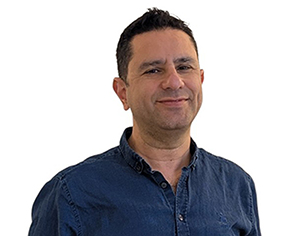
I write this as Mr Baha Bagdadi (GDC 227851), a dentist with a special interest in oral surgery and implantology at DentAkademi London, Harley Street Specialist Hospital, 18–22 Queen Anne Street, London W1G 8HU. Our provider is UGE Dent Ltd (CQC Ref RGP1-26442097539). The tone is deliberately practical: costs first, then the clinical reasoning behind them.
DentAkademi’s Current Implant Fees (2026)
These are starting figures for straightforward cases. Final fees appear on a written treatment plan after clinical assessment and CBCT. 0% finance may be available subject to status; we do not invent APR terms on a webpage.
| Treatment | DentAkademi London — from |
|---|---|
| Single tooth implant (fixture + abutment) | from £1,500 |
| Implant crown | from £1,250 |
| All-on-4 (per arch) | from £9,500 |
| All-on-6 (per arch) | from £11,000 |
| Full mouth (both arches) | from £18,000 |
Bone grafting, sinus lifts, extractions, periodontal therapy, sedation, and complex laboratory work are assessed individually. They are not buried in small print; they are simply case-specific, so inventing a fixed add-on price here would mislead as often as it would help.
For the clinical overview of how we place implants, see our dental implants treatment page. For whole-mouth planning in more depth, the companion guides on whole-mouth implant cost in London and how much full-mouth implants cost sit alongside this article.
What “From £1,500” Actually Means
When we say a single tooth implant is from £1,500, we mean the surgical fixture and the abutment — the titanium (or similar) root replacement and the connector that will later hold the crown. The crown itself is listed separately from £1,250 because laboratory work varies with material, shade matching, and occlusal complexity. A patient who needs a straightforward premolar restoration and a patient who needs a highly characterised front tooth are not the same laboratory job, even if both involve “one crown”.
This split is deliberate. Some London clinics publish an all-in package. Others publish the surgery only. Both approaches can be fair if the small print is clear. Trouble starts when a patient compares Clinic A’s all-in figure with Clinic B’s fixture-only figure and assumes Clinic B is cheaper by a thousand pounds. Often the gap vanishes once the crown, scan, and temporary tooth are added.
Ask-What’s-Included Checklist
Before you accept any London quote, ask for answers in writing:
- Does the fee include the implant fixture, the abutment, and the final crown?
- Is the CBCT scan included, charged separately, or offered as a promotional item?
- Who places the implant — name and GDC number?
- What temporary restoration do you leave with on the day of surgery, if any?
- Are bone grafts or sinus lifts excluded until assessed?
- How many review appointments after placement are included?
- What happens if integration fails within a stated period — retreatment policy, not marketing reassurance?
- Is sedation or general anaesthesia an extra fee?
- Which implant system is planned, and can that change if bone quality differs?
- When is each stage payable — consult, surgery, crown fit?
If a clinic cannot answer those without improvising, treat the headline price as provisional. At DentAkademi, the written plan after CBCT is the document that matters, not the table on this page.
Abutments are not all identical. A stock abutment may suit a straightforward posterior tooth; a custom one helps when the implant emerges at an awkward angle or when a front tooth needs a specific gum contour. Custom work costs more laboratory time. If two quotes differ by a few hundred pounds on “the same implant”, one may include custom abutment work the other has not priced yet.
Typical London Market Ranges (Directional)
Private fees across London commonly land somewhere in these bands for 2026, based on published clinic guides and fee lists rather than gossip:
- Single implant with crown (all-in): often roughly £2,000–£4,500 in central London, with outer boroughs sometimes a little lower
- Surgical stage alone (fixture ± abutment): frequently quoted from the mid-£1,000s upward when the crown is separate
- Full-arch fixed solutions (All-on-4 style, per arch): commonly advertised from around £9,000 into the low-to-mid £20,000s depending on materials, provisional teeth, and whether zygomatic or extensive grafting is involved
Those ranges are directional. A Harley Street postcode does not automatically mean the highest fee in the city, and a lower fee does not automatically mean poorer care. Overhead, referral patterns, implant brand, laboratory partner, and how much planning time is built into the fee all move the number. What you should distrust is any claim that one clinic’s price is a fixed percentage “cheaper than London” without defining the comparator. We do not use that framing here.
Our own starting fees sit at the accessible end of central London private care for straightforward cases: fixture and abutment from £1,500, crown from £1,250, All-on-4 from £9,500 per arch, All-on-6 from £11,000 per arch, both arches from £18,000. Accessibility does not mean every case finishes at the floor price. Bone anatomy decides that.
The Single Implant Journey — And When Money Is Spent
Patients often ask when they will be asked to pay. The clinical sequence and the financial sequence usually line up like this.
Consultation and CBCT
You attend for examination and a three-dimensional scan. We look at bone height and width, the position of the inferior dental nerve in the lower jaw, sinus floor height in the upper jaw, gum health, bite, and adjacent teeth. Medical history matters: bisphosphonates, uncontrolled diabetes, heavy smoking, and active gum disease all change risk and timing. You leave with a written plan and a fee for the stages agreed — not a verbal approximation that evaporates later.
Some practices charge for the consultation and scan; some package them. Either way, insist on knowing before you book. At DentAkademi the plan is produced after we have seen the CBCT, because quoting from a panoramic film alone is guesswork dressed as confidence.
Surgery Day
Under local anaesthetic — or sedation if arranged — the site is prepared and the fixture placed. For many straightforward cases this takes under an hour of chair time, though complex sites take longer. You may leave with a temporary tooth if aesthetics or function require it. Immediate temporary restoration is common in suitable cases; it is not universal. Soft bone, infection risk, or heavy bite forces can mean a healing period without a fixed temporary on that implant.
The surgical fee typically covers the fixture, sterile components, and the placement visit. Abutment timing varies: some abutments are placed at surgery; others at second-stage uncovering after healing.
Discomfort after placement is usually managed with ordinary analgesia for a few days. Bruising and swelling can be more noticeable in the lower jaw and in grafted sites. You should leave with written aftercare: diet, cleaning around sutures, and which symptoms mean you ring the clinic rather than wait for the next review.
Healing and Osseointegration
Titanium integrates with bone over roughly three to six months in most mouths. Upper jaw sites and grafted sites often sit toward the longer end. During this period you attend reviews. You are not “finished” because the surgery felt uneventful. Integration is quiet biology, not theatre drama, and it still needs checking.
Crown Stage
Once stability is confirmed, impressions or digital scans go to the laboratory. The final crown is tried in, adjusted for contact points and bite, then fitted. This is where shade, shape, and occlusion earn their fee. A molar that only needs to chew is a different brief from a central incisor that has to disappear into a smile line.
So a patient who reads “from £1,500” and “from £1,250” should mentally hold both numbers, then add any grafting or temporary work that the plan lists. That is the honest arithmetic.
Bone Grafts and Sinus Lifts — When They Change the Quote
Teeth have roots that stimulate bone. Remove a tooth and leave the space empty for years, and the ridge often shrinks. Implants need bone around them the way fence posts need soil. If the CBCT shows a thin ridge or a low sinus floor, we discuss grafting before or at the time of placement.
Common situations:
- Socket preservation after extraction, to reduce collapse before an implant is planned
- Localised ridge graft where width is short
- Sinus lift in the upper molar/premolar region when the sinus has dropped into the space where an implant needs to sit
- Larger reconstructions after trauma, long-term denture wear, or infection — less common, more planning
We do not publish locked graft fees on this page because the material volume, membrane, surgical time, and whether grafting can be done simultaneously with the implant all differ. A three-millimetre width deficit is not the same operation as a bilateral sinus augmentation. Those items are costed on the written plan after CBCT. If another clinic quotes a rock-bottom implant fee and then surprises you with grafting at the chairside, the problem was transparency, not grafting itself. Grafting is often good medicine.
Sometimes a graft and an implant can go in together when stability is sound and infection risk is low. Sometimes the graft needs months to mature first. Simultaneous treatment shortens the calendar when appropriate; staged treatment protects the result when it is not. Pushing every case into a same-day package to keep a promotional price tidy is how complications get invited.
Immediate placement into a fresh socket can work when socket walls are intact and the bite can protect the site. Delayed placement is wiser after infection or when the facial wall is thin. Immediate is not automatically superior — it is a judgement call from CBCT and the chairside view.
Smoking, active periodontitis, and poorly controlled systemic disease raise the chance that grafting and implants need staging rather than combining. That staging affects both calendar and cost. Better to hear it at planning than after a failed shortcut.
Several Missing Teeth: One Implant Per Tooth, or a Bridge on Implants?
If you are missing three teeth in a row, you do not always need three implants. Two implants can sometimes support a three-unit bridge. Four missing teeth might be restored with two or three fixtures depending on span, bite force, and bone. The engineering question is load distribution; the biological question is cleanable embrasures and gum health; the financial question is fewer fixtures versus a larger laboratory bridge.
One-implant-per-tooth is simplest to maintain and easiest to repair in isolation. Bridges on implants can reduce surgical sites and cost where anatomy and occlusion allow. Neither is automatically “better”. What is poor practice is designing the cheapest span the laboratory can make without checking whether you can floss under it or whether the cantilevers will overload the fixtures.
At consultation we sketch both options when they are realistic, with fees against each. Patients who arrive fixed on “one implant for every missing tooth” sometimes save money and surgery time once they see a well-designed implant bridge plan. Others prefer discrete crowns for long-term flexibility. Your preference matters once the biology is sound.
Connecting implants to natural teeth in one rigid bridge is generally avoided: teeth move slightly in their ligaments and implants do not, so the mismatch stresses cement and bone. Separate units usually age more kindly.
All-on-4 and All-on-6 — Brief Pointers
When most or all teeth in an arch are failing, placing an implant for every tooth becomes impractical. Full-arch fixed bridges on four or six implants — commonly discussed as All-on-4 and All-on-6 — rebuild an arch with a smaller number of fixtures and a fixed prosthesis. At DentAkademi:
All-on-6 is not a vanity upgrade. Extra fixtures can help where bone quality is softer, where bite forces are high, or where the prosthesis design needs more support. All-on-4 remains appropriate for many arches with favourable anatomy. Choice follows CBCT and clinical examination, not a sales ladder.
Same-day fixed temporaries are often part of these pathways when primary stability allows. Final prostheses come later, after soft tissues settle and we confirm integration. Materials for the final bridge — high-strength acrylic, composite, zirconia, and hybrids — change laboratory cost and longevity profile. Those decisions belong in the written plan.
NHS Reality for Dental Implants
NHS dental implants exist, but they are not a routine option for a single missing tooth in an otherwise healthy mouth. Funding is generally reserved for specific clinical pathways — for example, some patients with hypodontia, major trauma, or reconstruction after cancer surgery — and access depends on local commissioning and hospital referral criteria. Most adults seeking implants for tooth loss after decay, gum disease, or failed root treatments will be looking at private care.
That is not a political point. It is simply how services are currently organised. If you believe you may meet NHS criteria, start with your GDP and ask about referral routes. Do not assume a private consultation is wasted; many patients need clarity on private options while a referral is explored. We will say plainly if we think an NHS pathway should be tried first.
Materials and Implant Systems
We work with established systems including Straumann, Nobel Biocare, and Osstem, selected case by case rather than as a single house brand for every mouth. Mr Bagdadi chooses after seeing bone quality, restorative space, and the laboratory plan — and explains the choice in ordinary language.
Crown and bridge materials matter too. Zirconia and porcelain options dominate aesthetic zones; metal-ceramic still has a place. “Cheaper crown” sometimes means a material that wears or stains sooner in a heavy bite. Ask what is planned and why, not only what it costs.
No system turns poor planning into a good result. Brand stickers on a website are not a substitute for CBCT-based positioning and a cleanable prosthetic design.
Who Places Implants at DentAkademi
Implant treatment at our London clinic is provided by Mr Baha Bagdadi (GDC 227851), a GDC-registered dentist with a special interest in oral surgery and implantology. He is not listed as a GDC-registered specialist in oral surgery; that distinction matters, and we state it accurately.
He qualified DDS at Gazi University Faculty of Dentistry in 2001 and has worked in the UK since 2004. Hospital experience in oral and maxillofacial surgery includes Senior House Officer posts at Oxford’s John Radcliffe Hospital, St George’s Hospital London, and Buckinghamshire Hospitals NHS Trust. He has practised at Harley Street Specialist Hospital since December 2024 and provides private oral surgery and implant care through DentAkademi London.
Red Flags in Cheap Quotes — And Treatment Abroad
Low fees are not automatically unsafe. High fees are not automatically excellent. Look for process failures:
- No CBCT before surgical commitment on anything beyond the simplest sites
- Refusal to name the implant system or the placing clinician’s GDC number
- Pressure to pay the full surgical fee before you have a written plan
- “Guarantee for life” language without defining what is covered
- Quotes that ignore gum disease in the rest of the mouth
- Abroad packages that price only the surgery week and leave UK dentists to inherit poorly documented components later
Treatment overseas can be clinically competent. The risk is continuity: records, component compatibility, who funds retreatment, and how quickly you can be seen if something goes wrong after you fly home. If you prefer to keep surgery and aftercare under one CQC-registered roof in London, that preference is rational, not fearful.
Frequently Asked Questions
How much do dental implants cost in London in 2026?
Private single-tooth treatment commonly falls around £2,000–£4,500 all-in across London clinics. At DentAkademi, the surgical fixture and abutment start from £1,500 and the implant crown from £1,250, with a written plan after CBCT confirming your figure. Full-arch options start from £9,500 per arch for All-on-4, £11,000 per arch for All-on-6, and £18,000 for both arches.
Does the from £1,500 fee include the crown?
No. From £1,500 covers the implant fixture and abutment in standard single-tooth cases. The crown is from £1,250.
Are bone grafts included?
Not automatically. Grafts and sinus lifts are assessed individually on CBCT and costed on the written plan.
How long does a single implant take from start to finish?
Often three to six months from placement to final crown, longer if grafting is staged or healing is slow.
Can I get dental implants on the NHS?
Sometimes, in tightly defined clinical situations via referral pathways. Routine replacement is usually private.
Is 0% finance available?
0% finance may be available subject to status. Terms depend on the finance provider and treatment amount.
Which implant brands do you use?
Straumann, Nobel Biocare, and Osstem are among the systems we use, chosen case by case.
Who will treat me?
Mr Baha Bagdadi (GDC 227851), dentist with a special interest in oral surgery and implantology, provides implant care at DentAkademi London.
Do implants last forever?
Fixtures can last decades with healthy bone and gums. Crowns and bridges wear and may need replacement over time.
What if I need teeth in both jaws?
Both arches start from £18,000 for suitable full-arch pathways.
Will I be without a tooth during healing?
Not necessarily. Many patients leave surgery with a temporary tooth. Full-arch pathways often use fixed temporaries from the surgical day when stability allows.
What happens if an implant does not integrate?
Integration failure is uncommon but not mythical. A serious clinic will explain their retreatment approach in writing before treatment, not after disappointment.
Get your personal implant quote
Book a consultation at DentAkademi London and receive a written treatment plan after CBCT — no guesswork, no hidden stages.
Online Consultation — £50
WhatsApp Us