Restorative Dentistry · Porcelain Crowns
Porcelain Crowns in London: Cost, What They Are For, and What to Ask
If you have searched “porcelain crowns London” or “dental crown cost London” in the past month, you will have met a familiar mess. One clinic lists ceramic crowns from seven hundred pounds. Another in the same postcode starts north of two thousand. Some pages call everything “porcelain” whether the lab used layered ceramic, lithium disilicate, or zirconia. A few still talk about “white crowns” as if that were a clinical specification. None of this is necessarily dishonest. Most of it is loose labelling meeting marketing urgency.
A crown is not a single product you pick off a shelf. It is a laboratory-made cover bonded or cemented onto a prepared tooth — or onto an abutment on an implant — after the clinician has decided how much tooth structure to keep, which material suits the bite, and how the shade should sit against neighbouring teeth. Until those decisions are written down, comparing two websites is like comparing the price of a suit with and without the alterations.
This page does three things. It explains what a porcelain crown actually is, in patient language. It sets out DentAkademi’s published “from” fees for the crown materials we list publicly. And it walks through the appointments, the trade-offs with veneers and bonding, and the questions worth asking any clinic in W1 before you pay a deposit. It will not diagnose your tooth over the internet. No honest dentist can. A written plan after examination — and radiographs where needed — is the only figure that belongs to your mouth.
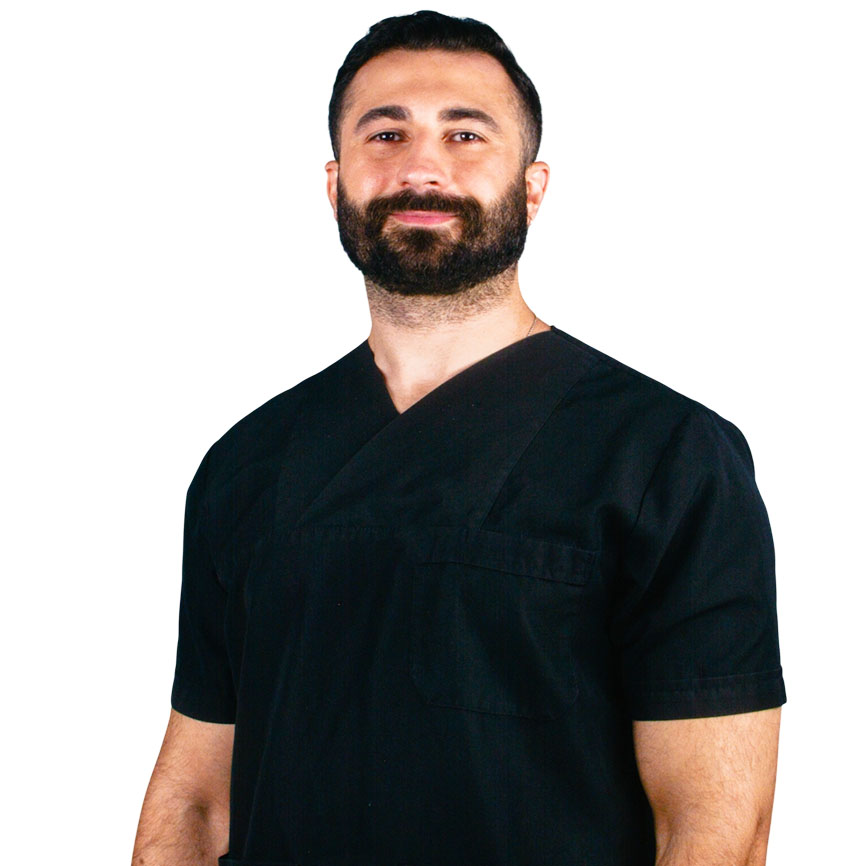
I write this as Dr Onat Ege Kutluturk (GDC 315571), a dentist focusing on aesthetic and restorative dentistry at DentAkademi London, Harley Street Specialist Hospital, 18–22 Queen Anne Street, London W1G 8HU. Our provider is UGE Dent Ltd (CQC Ref RGP1-26442097539). I am a GDC-registered dentist; I am not listing myself here as a GDC Specialist. That distinction matters, and we state it accurately. The tone is practical: what crowns are for, what they cost in our published list, and what moves a quote.
What a Porcelain Crown Actually Is
In everyday speech, “porcelain crown” usually means a tooth-coloured full-coverage restoration — a cap that covers the visible tooth after the dentist has reduced enamel and dentine to make space for the material. Technically, porcelain is a ceramic. Modern dentistry uses several ceramics and ceramic-like materials under that umbrella: feldspathic porcelain layered on a core, lithium disilicate (often discussed under the trade name E.max), high-strength zirconia, and older porcelain-fused-to-metal (PFM) designs that still have a place in heavy bite areas.
What they share is the job. The crown restores shape, protects weakened tooth structure, seals the margins if the preparation and cementation are sound, and — when shade and contour are done carefully — disappears into a smile line. What they do not share is strength profile, translucency, how much tooth needs removing, or laboratory cost. Calling every white crown “porcelain” on a fee list is convenient for the website and unhelpful for the patient.
A crown sits on a natural tooth root (or on an implant abutment). It is not the same as a veneer, which covers mainly the front face of a tooth with less overall reduction in many cases. It is not the same as a large composite filling, which is built chairside without a laboratory stage. And it is not an implant: if the root is gone, we are having a different conversation entirely — one that belongs on our dental implants London prices guide as much as here.
When a Crown Is the Right Conversation (and When It Is Not)
Crowns enter the discussion when a tooth needs more than a filling can reliably give. Typical situations include:
- A tooth with a large, failing restoration where remaining walls are thin
- Fracture of a cusp or crack lines that put the tooth at risk under chewing load
- After root canal treatment on a back tooth, where the remaining structure is brittle and benefits from full coverage
- Heavily worn teeth where rebuilding height and protecting dentine matters
- Teeth that have had significant shape or shade change and need a durable outer shell rather than surface bonding alone
- An implant that needs its final tooth-coloured cover — an implant crown, which is a different fee line from a crown on a natural tooth
Crowns are not automatic. A small chip on a front tooth may suit composite bonding. Mild colour change with intact enamel may suit whitening and careful bonding, or in selected cases a veneer. A tooth with hopeless gum disease or a vertical root fracture may need extraction and replacement rather than another crown. Active untreated gum disease in the rest of the mouth should be stabilised before we invest laboratory time in a single tooth that sits in an unhealthy environment.
I will also say this plainly: wanting a crown because a friend had one is not a clinical indication. Wanting a brighter smile may lead to bleaching, orthodontics, bonding, veneers, or crowns — different tools, different amounts of irreversible preparation. The consultation is where we match the tool to the problem, not the other way round.
Porcelain vs E.max vs Zirconia vs PFM — Patient Language
Patients hear brand names and material names used interchangeably. Here is the practical map we use in clinic.
Porcelain / layered ceramic. Classic tooth-coloured ceramic, often layered for translucency. Beautiful when done well on carefully prepared teeth, especially in the smile zone. Strength depends on the underlying core and the thickness. Not every “porcelain” quote means the same laboratory recipe.
E.max (lithium disilicate). A glass-ceramic known for a useful balance of strength and aesthetics. Often chosen for front teeth and premolars where translucency matters and bite forces are moderate. At DentAkademi, E-Max crowns are listed from £850 per tooth. The final figure still depends on the clinical and laboratory brief.
Zirconia. A high-strength ceramic oxide, popular for back teeth and for cases that need toughness. Modern zirconia can look more natural than early opaque versions, though very translucent anterior work still needs careful laboratory characterisation. Our zirconium crowns pathway is listed from £750 per tooth.
PFM (porcelain-fused-to-metal). A metal coping with ceramic stacked on top. Strong, long clinical track record, sometimes showing a dark line at the gum if recession appears years later. Still useful in selected posterior cases. We do not invent a separate locked PFM SKU on this page beyond what our published pricing already covers; if PFM is the right engineering choice for your bite, it appears on the written plan with its fee.
Implant crown. The tooth-coloured restoration on an implant abutment. At DentAkademi this is listed from £1,250, aligned with our implants pricing page — separate from the surgical fixture and abutment fees discussed in the implants guide.
None of these materials “wins” for every mouth. A heavily grinding patient with a fractured molar may need a different conversation from someone restoring a single central incisor for a wedding photograph. Material choice follows examination, radiographs, bite assessment, and how much tooth we can ethically keep.
DentAkademi Published “From” Fees — and What Moves a Quote
These are starting figures for straightforward cases. Final fees appear on a written treatment plan after clinical assessment. 0% finance may be available subject to status; we do not invent APR terms on a webpage.
| Treatment | DentAkademi London — from |
|---|---|
| Zirconium crown (per tooth) | from £750 |
| E-Max crown (per tooth) | from £850 |
| Implant crown | from £1,250 |
| Online consultation | £50 |
Our published UK crown guidance on site also discusses standard crowns from £895 in the article How much for a dental crown in the UK?. That page remains existing published guidance; this Insights piece does not invent new crown SKUs beyond the locked lines above. For the wider fee list, see our pricing page.
What moves a quote away from the floor price?
- How much tooth is left. A simple reduction on a solid core is a different laboratory and clinical job from rebuilding a broken-down tooth with a core build-up first.
- Position in the mouth. A back molar that only needs to chew is not the same aesthetic brief as a central incisor that has to match translucency and midline.
- Shade complexity. Heavy characterisation, multiple try-ins, or matching an existing ceramic smile takes laboratory time.
- Number of units. Four crowns planned together need occlusal design across the set, not four isolated islands.
- Need for root canal, posts, or periodontal work first. Those are separate stages with separate fees when indicated.
- Temporary phase. Most crown pathways include a temporary crown while the lab works; complex smile cases may need more provisional adjustment time.
- Remakes and refinements. Honest clinics budget for adjustment; endless free remakes without clinical reason are not a pricing model, they are a negotiation after poor planning.
If another London clinic quotes a rock-bottom “porcelain crown” and then adds core build-up, temporary, shade visit, and “premium ceramic” at the chairside, the problem was labelling, not ceramics. Ask what the headline includes before you compare.
Typical London / Harley Street Market Context (Directional)
Private porcelain and ceramic crowns across London often land roughly in the £700–£1,700 range per tooth for 2026, based on published clinic guides and fee lists rather than gossip. Harley Street and central W1 lists frequently sit toward the higher end of that band, and some highly characterised anterior work or complex multi-unit cases sit above it. Outer-borough practices sometimes publish lower starting figures. Those ranges are directional.
A Harley Street postcode does not automatically mean the highest fee in the city, and a lower fee does not automatically mean poorer care. Overhead, laboratory partner, clinician time in the smile zone, and how much planning is built into the fee all move the number. What you should distrust is any claim that one clinic is a fixed percentage “cheaper than London” without defining the comparator. We do not use that framing here.
Our zirconium crowns from £750 and E-Max crowns from £850 sit as published starting points for suitable cases. Accessibility at the floor price is not a promise that every case finishes there. Anatomy, aesthetics, and preparatory work decide that.
The Appointment Journey: Consult → Prep → Temporary → Lab → Fit
Patients often ask what will happen and when money is spent. The sequence usually looks like this.
Consultation
You attend for examination. We look at the tooth, neighbouring teeth, gums, bite, and existing restorations. Radiographs are taken when indicated. Medical history matters: grinding, acid reflux, previous trauma, and how you clean around the tooth all change the plan. You leave with options in writing — crown, onlay, rebuild with bonding, veneer where appropriate, or referral for root canal or periodontal care first — and a fee for the stages agreed, not a verbal approximation that evaporates later.
At DentAkademi, an online consultation is available for £50 via the booking link on this page. An online consult can clarify pathways and next steps; it does not replace a full clinical examination before irreversible preparation.
Preparation appointment
Under local anaesthetic, the tooth is shaped to make controlled space for the crown material. Old failing fillings may be replaced with a core. Impressions or digital scans are taken. A shade is recorded — sometimes with photographs for the laboratory. A temporary crown is fitted so you leave with a tooth that looks and functions acceptably while the lab works.
Preparation is irreversible. That is why we spend time on the consult: once enamel is removed for a full crown, you do not get that enamel back. Onlays and partial coverage designs exist for teeth that do not need full wrapping; we use them when the biology allows.
Laboratory stage
The laboratory builds the crown to the prescription: material, shade, contacts, occlusion. Turnaround is typically measured in days to a couple of weeks depending on complexity and schedule, not minutes. Same-day chairside milling exists in some practices for selected cases; it is not automatically superior for every aesthetic anterior tooth. We will say which pathway we are using and why.
Fit appointment
The temporary comes off. The tooth is cleaned. The crown is tried in for contacts, bite, shade, and margins. Adjustments happen before cementation or bonding. Once seated, we check cleaning access — you should be able to floss the contacts — and give aftercare advice. Sensitivity can linger for a short period after preparation; persistent pain needs review, not stoicism.
Review
A short review is often useful, especially for front teeth or multi-unit work. Bite can feel different for a few days as the joint and muscles adapt. If something feels high, say so early; grinding a polished ceramic later is less elegant than adjusting at fit.
After Root Canal: Why Crowns Often Follow
Root-treated back teeth lose vitality and often lose substantial structure from decay and access cavities. The remaining walls can crack under chewing. Full-coverage crowns are frequently advised after root canal treatment on molars and premolars for that reason — not because every root-filled tooth is doomed, but because the evidence and clinical experience favour protecting weakened cusps.
Front teeth after root canal are a more nuanced discussion. Some retain enough structure for a more conservative restoration; others need crowns for strength or shade (root-filled front teeth can darken). The decision follows how much dentine is left, the bite, and aesthetic goals.
If you have been told you need a root canal and a crown, ask whether both are planned in sequence, what temporary cover you will have, and whether the crown fee is separate from the endodontic fee. They usually are. Bundling without clarity is how patients feel ambushed.
Crowns vs Veneers vs Composite Bonding
These three are often searched as if they were competitors for the same job. Sometimes they overlap. Often they do not.
Composite bonding builds tooth-coloured resin on the surface, usually in one visit, with little or no enamel removal. Good for chips, small shape changes, and closing modest gaps. It stains and chips over time and needs maintenance. It is not a substitute for a crown on a heavily broken molar.
Veneers are thin ceramic (or composite) covers bonded mainly to the front of teeth. They can transform shade and shape with less reduction than a full crown in many cases — but they still involve irreversible preparation in ceramic pathways, and they need enough enamel and a sensible bite. They do not wrap and protect a cracked back tooth the way a crown can.
Crowns wrap the tooth. More preparation in most full-coverage designs; more structural protection when walls are weak. Chosen when the tooth needs armour, not only a new face.
A patient who wants “Hollywood teeth” may not need sixteen crowns. A patient with a fractured cusp after a filling fell out may not be helped by bonding alone. We sketch the least destructive option that solves the clinical problem first. Cosmetics can ride along when the biology allows; they should not drive unnecessary full-coverage preparation.
Front Teeth vs Back Teeth Decisions
Front teeth live under the microscope of conversation and photographs. Translucency, emergence profile at the gum, midline, and how light passes through the edge all matter. Lithium disilicate and carefully layered ceramics often earn their keep here. Preparation design aims to keep enamel for bonding where possible and to respect the gum margin so we do not create chronic inflammation for the sake of an opaque edge.
Back teeth live under load. Zirconia and robust ceramic or PFM designs are common. Contacts must allow floss; overhanging margins collect plaque; a high spot can make a healthy tooth ache. Aesthetic demands are real for premolars in a wide smile, but strength and cleanability lead.
Bruxism (grinding) and clenching change both conversations. A beautiful anterior ceramic in a grinding mouth without a night guard plan is an expensive experiment. We talk about guards honestly — not as an upsell, as risk management.
Longevity, Grinding, Night Guards — Honest Limits
How long does a crown last? Honest answer: it varies. Many crowns serve well for a decade or more; some last longer; some need earlier replacement after fracture, decay at the margin, gum changes, or bite wear. No ethical clinic guarantees a crown for life on a webpage. Materials fatigue. Patients grind. Sugar and dry mouth raise decay risk at margins. Gum disease can expose unsightly edges.
What you can influence:
- Cleaning around the margins daily — floss or interdental brushes as advised
- Managing sugar frequency and acidic drinks
- Attending reviews so small margin issues are caught early
- Wearing a night guard if you grind
- Not using front teeth as bottle openers (said lightly; seen often)
If a clinic offers a “lifetime guarantee” without defining what is covered — material fracture only, decay at margins, trauma, neglect — treat the language as marketing until the written policy is clear. We prefer plain aftercare and a clear remake discussion on the plan.
NHS vs Private (England) — Briefly
In England, NHS dental charges are organised in bands. Band 3 covers a course of treatment that can include crowns, bridges, and dentures, among other items. As a careful directional note for 2026, the Band 3 patient charge is in the region of £332.10 for a course of treatment — not a per-crown private-style fee for unlimited material choice. Confirm the current figure on official NHS sources when you book, because band charges are reviewed periodically.
NHS crowns are clinically appropriate in many situations, with material and laboratory choices constrained by the system. Private care buys time, material range (zirconia, E.max, highly characterised ceramics), elective aesthetics, and often shorter waits — at private fees. Neither pathway is morally superior. If your tooth can be restored appropriately on the NHS and that is your preference, start with an NHS dentist and ask what is available locally. If you want elective ceramic options, shade-driven anterior work, or treatment at our Harley Street clinic, you are in private territory, and the fees on this page apply as published starting points.
Questions Worth Asking Any W1 Clinic (Checklist)
Before you accept a crown quote in central London, ask for answers in writing:
- Which material is planned — zirconia, lithium disilicate/E.max, layered ceramic, PFM — and why for this tooth?
- Does the fee include the temporary crown, the laboratory stage, and the fit visit?
- Is a core build-up or root canal needed first, and how is that costed?
- Who prepares and fits the crown — name and GDC number?
- How many shade or try-in visits are included for a front tooth?
- What is the remake or adjustment policy if the shade is wrong at fit?
- Will I need a night guard, and is that separate?
- For implant crowns: is the abutment included or separate from the crown fee?
- When is each stage payable?
- Is 0% finance available subject to status, and who provides it?
If a clinic cannot answer those without improvising, treat the headline price as provisional. At DentAkademi, the written plan after examination is the document that matters, not only the table on this page.
Who Treats Crowns at DentAkademi
Restorative and aesthetic crown work at our London clinic is provided in this pathway by Dr Onat Ege Kutluturk (GDC 315571), a GDC-registered dentist focusing on aesthetic and restorative dentistry. He is not described here as a GDC Specialist; we keep that language accurate.
Care is delivered at DentAkademi London within Harley Street Specialist Hospital, 18–22 Queen Anne Street, London W1G 8HU, under provider UGE Dent Ltd (CQC Ref RGP1-26442097539). Implant surgery and implant-related planning may involve colleagues with a special interest in oral surgery and implantology where the case requires it — for example when an implant crown sits on a fixture placed as part of a wider plan. The implants fee structure is set out separately on our dental implants London prices page; implant crowns from £1,250 remain the restorative cover line referenced here.
Related Reading on Our Site
- Zirconium crowns treatment page — clinical overview and from £750 starting fee
- How much for a dental crown in the UK? — published UK crown guidance including standard crowns from £895
- Dental implants London prices — fixture, abutment, and implant crown context
- Pricing — wider published fee list
- Dr Onat Ege Kutluturk — clinician profile
Temporary Crowns, Sensitivity, and the Awkward In-Between Week
The temporary crown is not a decorative spare. It holds the gum margin, protects the prepared dentine, keeps neighbouring teeth from drifting into the space, and lets you chew something resembling a normal diet while the laboratory works. Temporaries are usually acrylic or similar chairside materials. They can stain with coffee and red wine more readily than the final ceramic. They can also debond if you lean on sticky toffee or tear food with that tooth alone.
If a temporary comes off, keep it safe and contact the clinic. Do not leave the preparation uncovered for days: sensitivity, gum overgrowth into the margin, and slight tooth movement can all complicate the fit visit. Over-the-counter pain relief and avoiding extremes of temperature help most short-term sensitivity after preparation. Sharp, lingering pain on biting after the final crown is seated is a different signal — that needs a review for a high spot or, less often, pulp trouble.
Patients sometimes ask whether they should hide for a fortnight between prep and fit. For a back tooth, almost nobody notices. For a front tooth, a well-made temporary is designed to look presentable in conversation and on a video call. Tell us about upcoming photographs, speeches, or travel before preparation day so we can plan shade and timing sensibly rather than inventing miracles at 5 p.m. the night before.
Digital Scans vs Traditional Impressions
Both can produce excellent crowns when used well. Digital intraoral scans are comfortable for many patients and make it easier to remake a capture if saliva or a cheek gets in the way. Traditional impressions with putty and wash still work; some laboratory workflows and deep subgingival margins still suit them. The patient-facing point is simpler: the quality of the record matters more than the gadget logo on the scanner. A rushed digital scan with missing margins is not better than a careful conventional impression, and the reverse is also true.
Ask which method your clinic uses and how they check margins before the laboratory starts. That question reveals more about process than a brochure photograph of a scanner arm.
Single Crown vs Several Units in One Plan
One crown on one broken molar is a contained project. Several front teeth planned together become a smile design exercise: midlines, lengths, and how the edges follow the lip. Fees multiply with units, but so does the need for a coherent plan. Treating four upper incisors as four unrelated white caps is how patients end up with a chessboard of shades.
If orthodontics would reduce how much enamel needs removing before ceramics, we say so — even when that means delaying the crown conversation. Straightening first is not upselling braces; it is sometimes the only way to avoid aggressive preparation for a cosmetic wish. Likewise, bleaching neighbouring teeth before final shade selection can prevent a new crown looking too bright or too dull against untreated enamel.
Multi-unit plans should list each stage and each fee line. Deposit structures vary; what should not vary is clarity about what you have agreed to before preparation begins on multiple teeth in one visit.
Maintenance After the Fit Visit
Ceramic does not decay. The tooth underneath the margin still can. The join line between crown and tooth is where plaque likes to sit if cleaning is casual. Interdental brushes or floss adapted to the contact shape matter more than an expensive toothpaste. Hygienist visits remain useful; tell the hygienist you have new ceramic so polishing pastes and instruments are chosen kindly.
Avoid chewing ice, pens, and olive stones on ceramic edges. If you play contact sport, a mouthguard belongs in the kit bag. If you wake with jaw ache or your partner hears grinding, raise it — a night guard is often cheaper than remaking a fractured ceramic edge, and it protects natural teeth too.
Colour of ceramic is stable compared with composite bonding. Coffee will not turn an E.max crown brown the way it can tint resin. Gum health, however, changes how the crown looks at the neck of the tooth: inflamed or receded gums expose margins or create dark triangles. Looking after gums is part of looking after the aesthetic result.
When a Crown Is Not Enough — Bridges and Implants in Brief
If a tooth cannot be restored predictably, extraction and replacement enter the conversation. A bridge uses neighbouring teeth as supports; an implant replaces the root with a fixture and later an implant crown. Neither is a small add-on to a failing crown plan. Our published implant crown fee from £1,250 sits on the restorative side of implant treatment; the surgical stages are covered in the dental implants London prices article. This page stays focused on crowns on teeth you are keeping — and on naming the implant crown line so fee comparisons stay honest.
A second opinion is reasonable when you have been told a tooth must come out, or that six veneers are required for a chip on one corner. Bring radiographs if you have them. We would rather explain options plainly than inherit a plan you never understood.
Laboratory Partnership and What “Handmade” Really Means
Every ceramic crown is a collaboration between the clinician’s preparation and the technician’s craft. “Handmade” on a website can mean anything from skilled layering by an experienced ceramist to a partially milled blank with a little surface stain. Neither is automatically wrong. What you want is a laboratory that can deliver the prescription for your case — strength where you grind, translucency where you smile — and a dentist who will send work back if the try-in is not right.
Ask whether the laboratory is UK-based or overseas, how shade communication works (photographs, shade tabs, try-in pastes), and whether a ceramist can attend or join a complex anterior fit. Answers vary. Empty adjectives do not.
Cost Anxiety Without the Hard Sell
Crown fees are significant for most households. That is allowed to be true without a sales script. Our published from fees — zirconium from £750, E-Max from £850, implant crowns from £1,250, online consultation £50 — exist so you can orient before you book. Staging treatment, prioritising the tooth at highest fracture risk first, and using 0% finance subject to status are practical conversations. Pressure to commit to a full smile makeover in one consult is not.
If a quote is higher than a website floor price, ask which line items moved it. If a quote is dramatically lower than typical central London ceramic fees, ask what material and which laboratory stages are included. Curiosity is not rudeness; it is how adults buy healthcare.
Frequently Asked Questions
How much do porcelain crowns cost in London?
Private porcelain and ceramic crowns in London often fall roughly in the £700–£1,700 range per tooth as a directional 2026 guide, with Harley Street lists frequently higher for complex aesthetic work. At DentAkademi, zirconium crowns start from £750 per tooth and E-Max crowns from £850 per tooth, with implant crowns from £1,250. Your written plan after examination confirms the figure for your tooth.
What is the difference between porcelain, E.max, and zirconia?
In patient language, “porcelain” is often used as a catch-all for tooth-coloured ceramic. E.max (lithium disilicate) balances strength and translucency for many front teeth and premolars. Zirconia is typically chosen when high strength is needed, including many back teeth. The right choice follows examination and bite, not a website hierarchy.
Does the from £750 zirconium fee include everything?
It is a published starting fee per tooth for suitable cases. Core build-ups, root canal treatment, additional try-ins for complex shade work, and night guards are assessed and costed separately when needed. Ask for a written inclusion list.
How long does getting a crown take?
Often two main visits after the consultation: preparation with a temporary, then fit once the laboratory has made the crown. Turnaround is commonly days to a couple of weeks. Complex multi-unit or highly characterised anterior cases can take longer.
Do I need a crown after a root canal?
Often on back teeth, yes — to protect weakened structure. Front teeth are more case-by-case. It is a clinical judgement after seeing how much tooth remains, not an automatic rule for every root filling.
Crowns or veneers — which should I choose?
Neither is universally better. Veneers mainly change the face of teeth with less wrapping; crowns protect teeth that need full coverage. Bonding may suit smaller chips. The least destructive option that solves the problem is the one we start from.
Can I get a crown on the NHS?
In England, Band 3 courses of treatment can include crowns, with patient charges set nationally (directional note for 2026: around £332.10 for a Band 3 course — confirm current official figures). Material choice and access differ from private care. Ask an NHS dentist what is available for your tooth locally.
Is 0% finance available?
0% finance may be available subject to status. Terms depend on the finance provider and the treatment amount. We do not invent APR figures on this page.
Will my crown look obvious?
A well-planned crown matched for shade, shape, and gum contour should blend. Perfect invisibility depends on the starting tooth, the material, and laboratory skill. We discuss realistic expectations at consult, especially if neighbouring teeth are worn or uneven.
How long do crowns last?
Many last a decade or more with good care; some longer; some need earlier replacement. Grinding, decay at margins, and gum change all affect lifespan. No honest lifetime guarantee without clear written terms.
Who will treat me at DentAkademi?
Dr Onat Ege Kutluturk (GDC 315571), dentist focusing on aesthetic and restorative dentistry, for this crown pathway. Implant placement, when relevant, may involve colleagues as described on our implants pages.
What should I ask before paying a deposit?
Material type and why; what the fee includes; GDC name of the treating dentist; temporary and fit stages; remake policy; whether preparatory treatment is separate. Get it in writing.
Ask about a porcelain crown plan
Book at DentAkademi London and receive a written treatment plan after examination — clear materials, clear fees, no guesswork.
Online Consultation — £50
WhatsApp Us