Cosmetic & Restorative · Decision Guide
Veneers vs Crowns in London: How to Choose, What It Costs, and What to Ask
If you have searched “veneers vs crowns”, “veneers or crowns London”, or “should I get veneers or crowns” this week, you will already know how muddled the answers feel. One clinic page treats veneers as the default smile upgrade. Another pushes crowns for anything that has ever chipped. A third mixes bonding, “Hollywood smiles”, and finance banners until the clinical question disappears. None of that fog helps when you are trying to decide whether a tooth needs a new face, a full protective shell, or something more conservative.
Veneers and crowns are not rival brands of the same product. They are different restorations with different amounts of tooth preparation, different jobs in the bite, and different failure modes. A veneer is usually a thin ceramic cover bonded mainly to the front of a tooth. A crown wraps the tooth more completely after the dentist has reduced enamel and dentine to make space. Bonding sits in a third category: tooth-coloured resin built chairside, often with little or no drilling. Until someone has examined your teeth, your gums, and your bite, comparing two websites is like comparing the price of a jacket with the price of armour.
This page is a patient decision guide. It explains what each option actually is, when veneers suit and when they do not, when crowns are the wiser conversation, where bonding still earns a place, and how mixed plans — some teeth veneers, some crowns — work in real mouths. It sets out DentAkademi’s published “from” fees for porcelain, laminate and Lovja veneers, zirconium and E-Max crowns, implant crowns, and composite bonding. It walks through the journey from consultation to temporary to laboratory to fit, and ends with questions worth asking any W1 clinic before you pay a deposit. It will not diagnose your tooth over the internet. No honest dentist can. A written plan after examination — and radiographs where needed — is the only figure that belongs to your mouth.
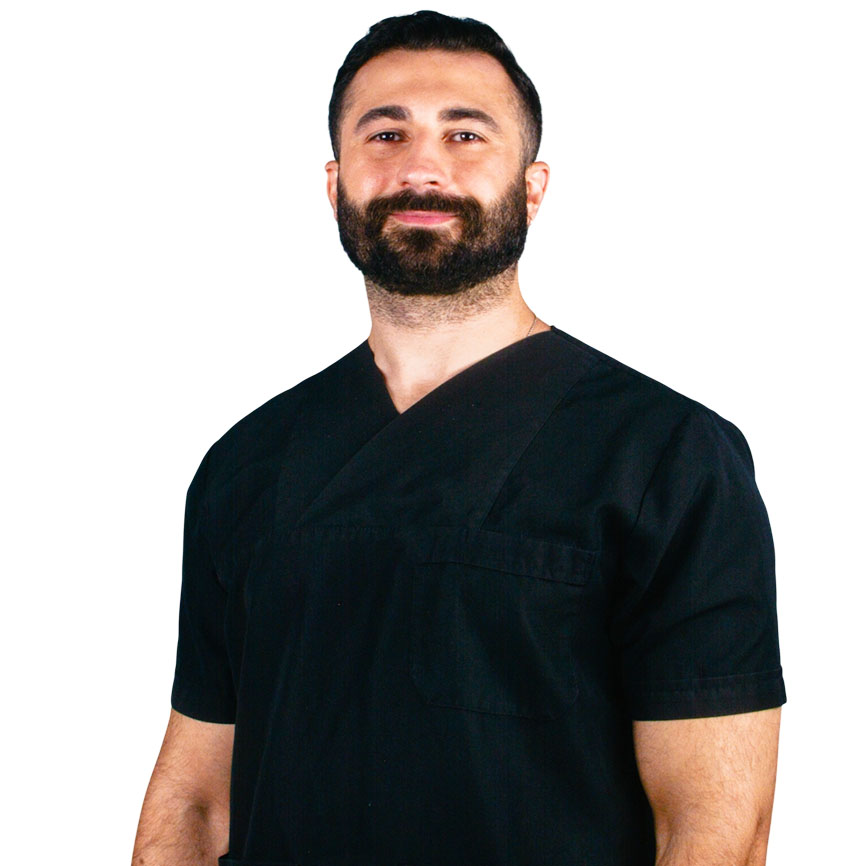
I write this as Dr Onat Ege Kutluturk (GDC 315571), a dentist focusing on aesthetic and restorative dentistry at DentAkademi London, Harley Street Specialist Hospital, 18–22 Queen Anne Street, London W1G 8HU. Our provider is UGE Dent Ltd (CQC Ref RGP1-26442097539). I am a GDC-registered dentist; I am not listing myself here as a GDC Specialist. That distinction matters, and we state it accurately. The tone is practical: how to choose, what it costs on our published list, and what to ask. This guide does not use Mr Baha Bagdadi as author; implant surgery pathways are covered separately on our implants pages when a missing tooth is the real problem.
Why Search Results Confuse Veneers vs Crowns
Search engines mash several different offers into one comparison. First, genuine private practices in Harley Street, Queen Anne Street, and wider London that plan ceramics after a proper assessment. Second, marketing pages that lead with “smile makeover” language and treat every discoloured front tooth as a veneer case. Third, crown pages written for fractured molars that barely mention aesthetics. Fourth, overseas and mail-order style offers that price “veneers” as a package without saying how much enamel will be removed or who holds GDC registration for aftercare in the UK.
Even within reputable private dentistry, labels differ. “Porcelain veneers from £X” may mean feldspathic ceramic, lithium disilicate, or a house brand with a different laboratory brief. “Porcelain crowns” on one fee list may mean zirconia, E.max, or porcelain-fused-to-metal on another. “Minimal prep” can mean carefully conservative reduction — or a slogan covering cases that still need substantial enamel removal once the mock-up is tried. Patients compare headline numbers under time pressure. That is how quotes that look similar on a phone screen diverge once preparation design, temporaries, shade visits, and night guards are clear.
Geography adds another layer. Harley Street and Queen Anne Street sit inside the same medical quarter. Patients type both. DentAkademi London practises at Harley Street Specialist Hospital on Queen Anne Street — W1G 8HU — so both search phrases point at the same neighbourhood decision: private aesthetic and restorative dentistry in central London with named clinicians, published starting fees, and a clear explanation of when a veneer is enough and when a crown is wiser.
Add photography theatre. Before-and-after galleries rarely list every auxiliary step in the photograph — whitening, gum contouring, orthodontics, bonding on neighbouring teeth, night guards. Incomplete labelling meeting genuine hope is how people start treatment that over-prepares healthy enamel, or decline a crown on a cracked tooth because a veneer looked prettier in an advert.
If a website cannot name the treating clinician with a GDC number, separate consultation from treatment fees, and explain whether each tooth is planned as a veneer, a crown, or bonding — treat the “veneers vs crowns” headline as provisional until a human confirms suitability and price.
What a Veneer Is vs What a Crown Is
Coverage
A veneer is typically a thin shell that covers mainly the front face of a tooth — and often a little over the biting edge and into the contact points, depending on the design. Its job is usually aesthetic and modestly structural: change shade, close small gaps, rebuild worn edges, improve shape. It relies on bonding to enamel (and sometimes dentine) for retention.
A crown is a full-coverage restoration. After preparation, it covers the visible tooth more completely — around the circumference — and is cemented or bonded into place. Its job is often protective as much as aesthetic: hold cracked walls together, cover a large failing filling, restore a root-treated back tooth, or rebuild heavily worn structure. An implant crown is a different animal again: the ceramic (or other) tooth sits on an implant abutment, not on your natural root.
Preparation and irreversibility
Both ceramic veneers and crowns usually involve irreversible tooth reduction. That sentence deserves to sit alone. Once enamel is removed to create space for ceramic, you do not get that enamel back. Some veneer pathways are described as “minimal prep” or even “no prep” in carefully selected cases; many still need controlled reduction so the final tooth does not look bulky. Crowns generally need more overall reduction because the material has to wrap the tooth with enough thickness for strength.
Composite bonding is the common exception patients hope for: resin added to the surface, often with little or no drilling. It is not a free lunch — it stains, chips, and needs maintenance — but it is often the least invasive first step when the problem is a small chip or modest shape change rather than a failing structural tooth.
How they fail differently
Veneers can chip at edges, debond if bonding protocol or isolation was compromised, or look wrong at the gum if gums change over years. Crowns can fracture, develop decay at the margin where ceramic meets tooth, or become visible at the neck if gums recede. Neither failure mode is “proof the material is bad”; both are reasons planning, bite management, and cleaning matter as much as the laboratory photograph.
When Veneers Suit — and When They Do Not
Veneers enter the conversation when teeth are largely intact, gums are healthy, and the main problems are shade, shape, small chips, modest gaps, or worn edges that bonding alone will not satisfy for the longevity you want. Typical situations include:
- Stubborn discolouration that whitening cannot fix fairly — for example some tetracycline banding or old dark fillings showing through (after we have discussed bleaching first where it still makes sense).
- Shape and proportion issues on front teeth that bother you in photographs or conversation.
- Small diastemas where orthodontics is declined or not required for the bite.
- Worn or uneven edges on otherwise solid front teeth.
- Smile-line consistency across several front teeth when enamel volume and bite allow a veneer design rather than full crowns.
Veneers do not suit every wish. They are a poor primary answer when:
- A tooth has large failing restorations, cracks through cusps, or insufficient enamel for predictable bonding — a crown conversation is usually more honest.
- Active gum disease or untreated decay is present; ceramics on an unhealthy foundation fail early.
- Heavy grinding is unmanaged and the patient will not wear a night guard; beautiful anterior ceramics without bite protection are an expensive experiment.
- Significant misalignment would be better treated with orthodontics first, so less enamel needs removing for cosmetics.
- The patient wants a reversible trial only — ceramic pathways are not a weekend costume change.
- A back tooth needs structural armour under chewing load; veneers are not molar crash helmets.
Wanting veneers because a friend had them is not a clinical indication. Wanting a brighter smile may lead to whitening, bonding, orthodontics, veneers, crowns, or a mix. The consultation matches the tool to the problem.
When Crowns Suit — and When They Do Not
Crowns enter the discussion when a tooth needs more than a surface cover can reliably give. Typical situations include:
- A tooth with a large, failing restoration and thin remaining walls.
- Fracture of a cusp or crack lines that put the tooth at risk under chewing.
- After root canal treatment on a back tooth, where remaining structure is brittle and benefits from full coverage.
- Heavily worn teeth where rebuilding height and protecting dentine matters.
- Teeth that need a durable outer shell after significant shape or shade change when veneer coverage would leave weak walls.
- An implant that needs its final tooth-coloured cover — listed separately as an implant crown.
Crowns are not automatic. A small chip on a front tooth may suit composite bonding. Mild colour change with intact enamel may suit whitening and careful bonding, or in selected cases a veneer. A tooth with hopeless gum disease or a vertical root fracture may need extraction and replacement rather than another crown. Active untreated periodontitis in the rest of the mouth should be stabilised before we invest laboratory time in a single tooth sitting in an unhealthy environment.
I will also say this plainly: crowning sixteen healthy teeth for a social media aesthetic is not the same as crowning one fractured molar. Elective full-coverage preparation on intact enamel deserves slow consent, not a same-day sales close.
Bonding as the Less Invasive Alternative When Appropriate
Composite bonding builds tooth-coloured resin on the surface, usually in one visit, with little or no enamel removal. It is good for chips, small shape changes, closing modest gaps, and buying time while you decide on ceramics. At DentAkademi, composite bonding is listed from £250 per tooth on our published fees.
Bonding is not a substitute for a crown on a heavily broken molar. It stains and chips over time and needs maintenance or replacement. It can look excellent in the right case and disappointing when used to fake the strength of full coverage. When we sketch options, bonding often appears as the least destructive first step — not as a second-class consolation prize.
Sequence matters. Whitening before bonding or veneer shade selection often makes sense so you are not matching new work to teeth you still plan to bleach. Our teeth whitening London guide covers honest limits; this page will not repeat every whitening pathway.
Material Notes Without the Brochure Fog
Veneer materials we list publicly
Porcelain veneers. In patient language this usually means laboratory ceramic bonded to the front of teeth. At DentAkademi, porcelain veneers are listed from £750 per tooth. See also our porcelain veneers treatment page.
Laminate veneers. Often discussed as a thin ceramic laminate pathway. Our published starting fee is from £650 per tooth. For a deeper comparison of veneer labelling on our site, see veneers vs laminate veneers — related reading, not a duplicate of this crowns decision guide. Clinical overview: laminate veneers.
Lovja veneers. A distinct premium veneer pathway we publish from £3,000 per tooth. Details belong on the Lovja pages rather than as marketing fluff here: Lovja at DentAkademi and what makes Lovja different. On this decision guide, the point is simply that not every “veneer” on a London fee list is the same laboratory and clinical brief.
Crown materials we list publicly
Zirconium crowns. High-strength ceramic oxide, popular when toughness matters, including many back teeth. Listed from £750 per tooth. Treatment overview: zirconium crowns. Companion Insights: porcelain crowns in London.
E-Max crowns. Lithium disilicate glass-ceramic known for a useful balance of strength and translucency for many front teeth and premolars. Listed from £850 per tooth.
Implant crowns. The tooth-coloured restoration on an implant abutment, from £1,250 — separate from surgical fixture fees on the dental implants London prices page.
None of these materials “wins” for every mouth. A grinding patient with a fractured molar needs a different conversation from someone restoring two central incisors for a wedding photograph. Material choice follows examination, radiographs, bite assessment, and how much tooth we can ethically keep.
DentAkademi Published From-Fee Table
These are starting figures for straightforward cases. Final fees appear on a written treatment plan after clinical assessment. 0% finance may be available subject to status; we do not invent APR terms on a webpage. For the wider list, see pricing.
| Treatment | DentAkademi London — from |
|---|---|
| Porcelain veneer (per tooth) | from £750 |
| Laminate veneer (per tooth) | from £650 |
| Lovja veneer (per tooth) | from £3,000 |
| Zirconium crown (per tooth) | from £750 |
| E-Max crown (per tooth) | from £850 |
| Implant crown | from £1,250 |
| Composite bonding (per tooth) | from £250 |
| Online consultation | £50 |
What moves a quote away from the floor price? How much tooth is left; position in the mouth; shade complexity and try-ins; number of units planned together; need for core build-ups, root canal, or periodontal work first; temporary phase complexity; and remake policy clarity. If another London clinic quotes a rock-bottom “porcelain” figure and then adds temporary, shade visit, “premium ceramic”, and night guard at the chairside, the problem was labelling, not ceramics.
We do not claim to be a fixed percentage “cheaper than London” or “75% cheaper”. Published from-fees and a written plan after examination are how adults buy healthcare. Ignore promo strikethrough theatre when comparing clinics.
Typical London Market Ranges (Directional)
Private fees across London commonly land somewhere in these bands for 2026, based on published clinic guides and fee lists rather than gossip:
- Porcelain / ceramic veneers: competitors often publish roughly £995–£1,400 per tooth as directional central London starting points, with some Harley Street lists at or above that band for complex multi-unit smile work.
- Ceramic / porcelain crowns: often roughly £700–£1,700 per tooth as a directional private range, with material and aesthetic complexity moving the figure.
- Composite bonding: widely variable; our published from £250 sits as a starting guide for suitable cases.
Those ranges are directional. A Harley Street postcode does not automatically mean the highest fee in the city, and a lower fee does not automatically mean poorer care. Overhead, laboratory partner, clinician time in the smile zone, and how much planning is built into the fee all move the number. Our porcelain veneers from £750, laminate from £650, zirconium crowns from £750, and E-Max crowns from £850 sit as published starting points for suitable cases — not a promise that every case finishes at the floor.
The Journey: Consult → Prep & Temps → Lab → Fit
Consultation
You attend for examination. We look at each tooth, neighbouring teeth, gums, bite, existing restorations, and what you actually want to change. Radiographs are taken when indicated. Medical history matters: grinding, acid reflux, previous trauma, orthodontic history, and how you clean around the teeth all change the plan. You leave with options in writing — bonding, veneer, crown, orthodontics referral, periodontal care first, or monitoring — and a fee for the stages agreed, not a verbal approximation that evaporates later.
At DentAkademi, an online consultation is available for £50 via the booking link on this page. An online consult can clarify pathways and next steps; it does not replace a full clinical examination before irreversible preparation.
Preparation and temporary restorations
Under local anaesthetic, teeth planned for ceramic are shaped to make controlled space. Old failing fillings may be replaced with cores where crowns are planned. Impressions or digital scans are taken. Shade is recorded — sometimes with photographs for the laboratory. Temporary veneers or temporary crowns are fitted so you leave with teeth that look and function acceptably while the lab works.
Preparation is irreversible for most ceramic pathways. That is why we spend time on the consult: once enamel is removed for a full crown — or reduced for a veneer — you do not get that enamel back. Temporary ceramics (or acrylic-style temps) hold gum margins, protect dentine, keep neighbouring teeth from drifting, and let you test length and shape before the final bond.
Laboratory stage
The laboratory builds each unit to the prescription: material, shade, contacts, occlusion. Turnaround is typically measured in days to a couple of weeks depending on complexity and schedule. Same-day milling exists in some practices for selected cases; it is not automatically superior for every aesthetic anterior tooth. We will say which pathway we are using and why.
Fit appointment
Temporaries come off. Teeth are cleaned. Ceramics are tried in for contacts, bite, shade, and margins. Adjustments happen before cementation or bonding. Once seated, we check cleaning access — you should be able to floss contacts — and give aftercare advice. Sensitivity can linger briefly after preparation; persistent pain needs review, not stoicism.
Review
A short review is often useful, especially for multi-unit smile work. Bite can feel different for a few days as joints and muscles adapt. If something feels high, say so early.
Mixed Plans: Some Teeth Veneers, Some Crowns — Honesty
Real mouths are not catalogues. It is common — and often correct — to plan veneers on structurally sound front teeth and crowns on heavily restored or cracked teeth in the same smile. Mixing is not a compromise sold to confuse you; it is matching coverage to biology.
What goes wrong in mixed plans is shade chessboarding: four veneers and two crowns made as six unrelated white caps. Multi-unit work needs a coherent design — midline, lengths, value of shade, how edges follow the lip. Fees multiply with units, but so does the need for one plan rather than six isolated islands.
If orthodontics would reduce how much enamel needs removing before ceramics, we say so — even when that means delaying the veneer conversation. Straightening first is not upselling braces; it is sometimes the only way to avoid aggressive preparation for a cosmetic wish. Likewise, bleaching neighbouring teeth before final shade selection can prevent new ceramics looking too bright or too dull against untreated enamel.
Ask for the plan tooth by tooth in writing: veneer, crown, bonding, or leave alone. If every tooth is somehow a crown in a young, lightly filled mouth, ask why. If every tooth is somehow a veneer on a mouth full of large amalgam replacements and cracks, ask why.
Grinding, Bite, Gum Disease, and Root-Treated Teeth
Grinding and clenching
Bruxism changes both veneer and crown conversations. Ceramic edges fail early under night-time load without protection. A night guard is risk management, not an upsell. If you wake with jaw ache or your partner hears grinding, raise it before preparation day.
Bite and guidance
How your front teeth guide the jaw in sideways and forward movements affects whether a veneer edge will survive. Crowns on back teeth change chewing contacts. Occlusal design is part of the fee whether the website mentions it or not. Clinics that ignore bite to rush a smile photograph invite chips.
Gum disease
Inflamed or unstable gums make ceramic margins look wrong and collect plaque. Active periodontitis should be stabilised before elective veneers or crowns. Looking after gums is part of looking after the aesthetic result years later when recession would otherwise expose edges.
Root-treated teeth
Root-treated back teeth often lose substantial structure and benefit from full-coverage crowns. Front teeth after root canal are more nuanced: some retain enough structure for a more conservative restoration; others need crowns for strength or shade (root-filled front teeth can darken). Veneers alone on a brittle, heavily accessed front tooth can be wishful thinking. The decision follows how much dentine is left, the bite, and aesthetic goals — after examination, not after a blog quiz.
Longevity and Maintenance Without Guarantees
How long do veneers or crowns last? Honest answer: it varies. Many ceramic restorations serve well for a decade or more; some last longer; some need earlier replacement after fracture, decay at margins, gum changes, or bite wear. No ethical clinic guarantees ceramics for life on a webpage. Materials fatigue. Patients grind. Sugar and dry mouth raise decay risk at margins.
What you can influence:
- Cleaning around margins daily — floss or interdental brushes as advised.
- Managing sugar frequency and acidic drinks.
- Attending reviews so small margin issues are caught early.
- Wearing a night guard if you grind.
- Not using front teeth as bottle openers (said lightly; seen often).
- Avoiding chewing ice, pens, and olive stones on ceramic edges.
Ceramic does not decay; the tooth underneath the margin still can. Colour of ceramic is stable compared with composite bonding. Coffee will not turn an E-Max crown brown the way it can tint resin. Gum health, however, changes how ceramics look at the neck of the tooth.
If a clinic offers a “lifetime guarantee” without defining what is covered — material fracture only, decay at margins, trauma, neglect — treat the language as marketing until the written policy is clear.
NHS Note (England) — Carefully
In England, NHS dental charges are organised in bands. Band 3 covers a course of treatment that can include crowns, bridges, and dentures, among other items. As a careful directional note for 2026, the Band 3 patient charge is in the region of £332.10 for a course of treatment — not a per-crown private-style fee for unlimited material choice. Confirm the current figure on official NHS sources when you book, because band charges are reviewed periodically.
NHS crowns can be clinically appropriate in many situations, with material and laboratory choices constrained by the system. Elective veneers for cosmetic shade and shape change are usually private. Neither pathway is morally superior. If your tooth can be restored appropriately on the NHS and that is your preference, start with an NHS dentist and ask what is available locally. If you want elective ceramic veneers, shade-driven anterior work, or treatment at our Harley Street clinic, you are typically in private territory, and the fees on this page apply as published starting points.
Questions Before You Pay a Deposit
Before you accept a veneer or crown quote in central London, ask for answers in writing:
- For each tooth: veneer, crown, bonding, or monitor — and why?
- Which material is planned, and why for this tooth?
- How much enamel will be removed, in plain language?
- Does the fee include temporary restorations, laboratory stage, and fit visit?
- Is a core build-up, root canal, or gum treatment needed first, and how is that costed?
- Who prepares and fits the work — name and GDC number?
- How many shade or try-in visits are included for front teeth?
- What is the remake or adjustment policy if shade is wrong at fit?
- Will I need a night guard, and is that separate?
- For implant crowns: is the abutment included or separate from the crown fee?
- When is each stage payable?
- Is 0% finance available subject to status, and who provides it?
If a clinic cannot answer those without improvising, treat the headline price as provisional. At DentAkademi, the written plan after examination is the document that matters, not only the table on this page.
Who Treats Veneers and Crowns at DentAkademi
Aesthetic and restorative veneer and crown pathways in this guide are provided by Dr Onat Ege Kutluturk (GDC 315571), a GDC-registered dentist focusing on aesthetic and restorative dentistry. He is not described here as a GDC Specialist; we keep that language accurate.
Care is delivered at DentAkademi London within Harley Street Specialist Hospital, 18–22 Queen Anne Street, London W1G 8HU, under provider UGE Dent Ltd (CQC Ref RGP1-26442097539). Implant surgery and implant-related planning may involve colleagues with a special interest in oral surgery and implantology where the case requires it — for example when an implant crown sits on a fixture placed as part of a wider plan. The implants fee structure is set out separately on our dental implants London prices page.
Related Reading on Our Site
- Porcelain crowns in London — cost, materials, what to ask
- Porcelain veneers treatment page
- Laminate veneers treatment page
- Veneers vs laminate veneers — related labelling guide, not a duplicate of this crowns decision article
- Lovja veneers and what makes Lovja different
- Composite bonding in London
- Teeth whitening in London — honest limits
- Dental implants London prices
- Pricing — wider published fee list
- Dr Onat Ege Kutluturk — clinician profile
Temporary Veneers and Crowns: The Awkward In-Between Week
The temporary is not a decorative spare. It holds the gum margin, protects prepared dentine, keeps neighbouring teeth from drifting into the space, and lets you chew something resembling a normal diet while the laboratory works. Temporaries are usually acrylic or similar chairside materials. They can stain with coffee and red wine more readily than final ceramic. They can also debond if you lean on sticky toffee or tear food with that tooth alone.
If a temporary comes off, keep it safe and contact the clinic. Do not leave the preparation uncovered for days: sensitivity, gum overgrowth into the margin, and slight tooth movement can all complicate the fit visit. Over-the-counter pain relief and avoiding extremes of temperature help most short-term sensitivity after preparation. Sharp, lingering pain on biting after final ceramics are seated is a different signal — that needs a review for a high spot or, less often, pulp trouble.
Patients sometimes ask whether they should hide for a fortnight between prep and fit. For a back crown, almost nobody notices. For front veneers, a well-made temporary is designed to look presentable in conversation and on a video call. Tell us about upcoming photographs, speeches, or travel before preparation day so we can plan shade and timing sensibly rather than inventing miracles at 5 p.m. the night before.
Digital Scans vs Traditional Impressions
Both can produce excellent veneers and crowns when used well. Digital intraoral scans are comfortable for many patients and make it easier to remake a capture if saliva or a cheek gets in the way. Traditional impressions with putty and wash still work; some laboratory workflows and deep subgingival margins still suit them. The patient-facing point is simpler: the quality of the record matters more than the gadget logo on the scanner. A rushed digital scan with missing margins is not better than a careful conventional impression, and the reverse is also true.
Ask which method your clinic uses and how they check margins before the laboratory starts. That question reveals more about process than a brochure photograph of a scanner arm.
Single Tooth vs Smile-Zone Sets
One crown on one broken molar is a contained project. Several front teeth planned together become a smile design exercise: midlines, lengths, and how the edges follow the lip. Treating six upper teeth as six unrelated white caps is how patients end up with a chessboard of shades.
Single-tooth veneers that must match natural neighbours are sometimes harder than a full set matched to itself. Matching one ceramic to aged natural enamel requires laboratory skill and honest expectation-setting. We discuss that at consult rather than promising invisibility as a marketing default.
Multi-unit plans should list each stage and each fee line. Deposit structures vary; what should not vary is clarity about what you have agreed to before preparation begins on multiple teeth in one visit.
Cost Anxiety Without the Hard Sell
Veneer and crown fees are significant for most households. That is allowed to be true without a sales script. Our published from fees exist so you can orient before you book. Staging treatment — prioritising the tooth at highest fracture risk first, using bonding while you save for ceramics, or combining whitening with limited bonding — are practical conversations. Pressure to commit to a full smile makeover in one consult is not.
If a quote is higher than a website floor price, ask which line items moved it. If a quote is dramatically lower than typical central London ceramic fees, ask what material and which laboratory stages are included. Curiosity is not rudeness; it is how adults buy healthcare.
Treatment abroad can be clinically competent. The risk is continuity: records, component compatibility, who funds retreatment, and how quickly you can be seen if something goes wrong after you fly home. If you prefer to keep preparation, fit, and aftercare under one CQC-registered roof in London, that preference is rational, not fearful.
How We Think About “Least Destructive First”
The ethical default in restorative dentistry is to remove as little healthy tooth as needed to solve the problem predictably. That does not mean never preparing for a veneer or crown. It means starting the conversation with whitening, bonding, orthodontics, or monitoring when those tools fit — and moving to ceramics when biology and goals require them.
Patients sometimes hear “conservative” as code for “cheap and temporary”. That is unfair to good bonding and unfair to well-planned ceramics. A conservative crown on a cracked molar can save the tooth. An aggressive set of veneers on teeth that only needed bleaching is not conservative, however beautiful the photographs.
Bring your priorities to the consult: wedding timeline, budget staging, fear of drilling, desire for stain resistance, willingness to wear a night guard. Those preferences sit beside the clinical findings. They do not replace them.
What “From” Means on This Page
Every fee labelled “from” is a published starting point for suitable cases. It is not a fixed package that ignores cores, gum therapy, night guards, or complex shade work. It is also not a bait figure designed to be abandoned the moment you sit down. The written plan after examination is where your number lives. Online consultation at £50 can help you decide whether an in-person assessment is worth your time; it still is not a substitute for chairside examination before irreversible prep.
Shade Matching, Whitening Sequence, and the “Too White” Trap
Patients often arrive with a phone photograph of a celebrity smile and a request for the brightest shade on the guide. Bright can look natural on some faces and theatrical on others. Skin tone, lip frame, age, and how much of the lower teeth show when you speak all matter. A veneer shade that photographs well under ring lights can look stark in daylight at a Queen Anne Street doorway.
Whitening natural teeth before final shade selection for veneers or crowns is often sensible when neighbouring enamel will remain visible. Bleaching after ceramics are bonded will not change the ceramic colour the way it changes natural dentine and enamel. Our published whitening pathways and honest limits sit on the teeth whitening London Insights page; the decision-guide point here is sequence. Do not lock a ceramic shade against teeth you still intend to bleach next month.
Single-tooth shade matching is a different craft from a matched set of six or eight units. Matching one central incisor veneer to an aged natural neighbour requires laboratory characterisation and realistic talk about what “invisible” means. Sometimes bonding is wiser for a small chip on an otherwise acceptable tooth. Sometimes a pair of veneers on both centrals is cleaner than one lonely ceramic island. Those are consult judgements, not website defaults.
Ask whether try-in paste or a provisional try-in is part of the fee for front-tooth work. Endless free remakes without a clinical reason are not a pricing model; one structured chance to refine shade and shape before final bonding is ordinary good practice.
Sensitivity, Pulp Risk, and When a “Simple Veneer” Becomes Endodontics
Preparing teeth for veneers or crowns can irritate the pulp. Most sensitivity settles. Persistent throbbing, night pain, or lingering pain to heat after the final fit needs review. Occasionally a tooth that seemed fine at preparation later needs root canal treatment — especially if it already had a large filling, a crack, or a history of trauma. That is not a secret failure of ceramics; it is biology under drilling and bonding stress.
Honest consent mentions that risk in proportion. It does not scare you away from a necessary crown on a cracked molar, and it does not pretend elective preparation of six healthy teeth is risk-free cosmetics. If a clinic shrugs when you ask about sensitivity and pulp risk, treat that shrug as information.
Deep subgingival margins, aggressive reduction for opaque ceramics, and preparations on already compromised teeth raise the stakes. Conservative preparation where enamel bonding is still possible is not only about ethics; it often improves longevity of the bond itself.
Sports, Instruments, and Habits That Break Ceramics
Contact sports without a mouthguard are a common way to fracture veneer edges and crown corners. So is using front teeth to open packaging, hold dressmaking pins, or cut fishing line. Musicians who grip reeds or mouthpieces, and people who nail-bite, need a specific habit conversation before we commit laboratory time to thin ceramic edges.
None of that means you cannot have veneers or crowns if you play rugby or the clarinet. It means planning protection and being honest about risk. A mouthguard in the kit bag is cheaper than remaking a chipped central incisor the week before a final.
Sticky sweets and hard ice are unkind to temporary restorations and can challenge final margins if you make a habit of them. Ordinary meals are fine once final ceramics are bonded and the bite has been checked. “Never eat again” advice is theatre; targeted habit advice is medicine.
Second Opinions and Inherited Plans
A second opinion is reasonable when you have been told you need eight veneers for mild crowding that orthodontics could improve, or sixteen crowns for shade change alone, or that a cracked tooth “must come out” without a clear explanation of restorability. Bring radiographs if you have them. Bring the written plan from the first clinic if it exists.
We would rather explain options plainly than inherit a plan you never understood. Sometimes we agree with the first recommendation. Sometimes we suggest bonding and whitening first. Sometimes we recommend a crown where a veneer was sold. That is not competition theatre; it is another set of eyes on your mouth.
If you started temporaries elsewhere and want us to finish, continuity of records, shade communication, and laboratory partnership become practical questions. Not every halfway plan transfers cleanly. Say so early rather than on the morning of a fit appointment.
Finance, Deposits, and Staging Without Pressure
0% finance may be available subject to status. We do not invent APR figures or monthly theatre on this page. Deposits and staged payments should be clear before preparation begins on multiple teeth. Paying a large deposit before you have a tooth-by-tooth written plan is how regret starts.
Staging can mean restoring the highest-risk cracked tooth first with a crown, then planning elective veneers later. It can mean bonding now and ceramics next year. It can mean whitening and waiting. Clinics that refuse to discuss staging because a package looks tidier on a spreadsheet are optimising for their paperwork, not your biology or budget.
Online consultation at £50 is a low-friction way to ask pathway questions before you travel into W1. It still ends with the same rule: irreversible preparation waits for a proper examination and a plan you understand.
Frequently Asked Questions
What is the difference between veneers and crowns?
A veneer is usually a thin ceramic cover bonded mainly to the front of a tooth for shade and shape. A crown wraps the tooth more completely after preparation and is chosen when the tooth needs structural protection as well as appearance. Neither is universally better; the least destructive option that solves the clinical problem is the starting point.
How much do veneers cost at DentAkademi London?
Porcelain veneers start from £750 per tooth, laminate veneers from £650 per tooth, and Lovja veneers from £3,000 per tooth on our published list. Final fees appear on a written plan after examination. Online consultation is £50.
How much do crowns cost at DentAkademi London?
Zirconium crowns start from £750 per tooth and E-Max crowns from £850 per tooth. Implant crowns start from £1,250. Your written plan after examination confirms the figure for your tooth.
Can I have veneers on some teeth and crowns on others?
Yes — mixed plans are common when some teeth are structurally sound and others need full coverage. Shade and shape should still be designed as one smile, not as unrelated white caps.
Is composite bonding an alternative?
Often for small chips, modest shape changes, and limited gaps. Bonding starts from £250 per tooth on our published list. It is less invasive than ceramics but stains and chips over time and is not a substitute for a crown on a heavily broken tooth.
Do veneers ruin your teeth?
Ceramic veneers usually involve irreversible enamel reduction. That is a real trade-off, not a slogan. Done for clear reasons with informed consent, they can be an appropriate tool. Done casually on healthy teeth that only needed whitening, they are overtreatment. Ask how much preparation is planned before you agree.
Can I get veneers or crowns on the NHS?
In England, Band 3 courses can include crowns (directional 2026 patient charge around £332.10 for a Band 3 course — confirm official figures). Elective cosmetic veneers are usually private. Ask an NHS dentist what is available locally for your tooth.
How long do veneers and crowns last?
Many last a decade or more with good care; some longer; some need earlier replacement. Grinding, decay at margins, and gum change all affect lifespan. No honest lifetime guarantee without clear written terms.
Who will treat me at DentAkademi for this pathway?
Dr Onat Ege Kutluturk (GDC 315571), dentist focusing on aesthetic and restorative dentistry. He is not listed here as a GDC Specialist. Implant placement, when relevant, may involve colleagues as described on our implants pages.
What should I ask before paying a deposit?
Tooth-by-tooth plan (veneer vs crown vs bonding); material and why; how much enamel removal; what the fee includes; GDC name of the treating dentist; temporary and fit stages; remake policy; night guard; payment staging. Get it in writing.
Will my ceramics look fake?
A well-planned veneer or crown matched for shade, shape, and gum contour should blend. Perfect invisibility depends on the starting teeth, the material, and laboratory skill. We discuss realistic expectations at consult, especially if neighbouring teeth are worn or uneven.
Is 0% finance available?
0% finance may be available subject to status. Terms depend on the finance provider and the treatment amount. We do not invent APR figures on this page.
Ask about veneers or crowns
Book at DentAkademi London and receive a written treatment plan after examination — clear options tooth by tooth, clear fees, no guesswork.
Online Consultation — £50
WhatsApp Us